The notebook
The interesting part often starts after the answer.
Worked examples, original scoring experiments, and small ideas for thinking clearly. These stories explain the choices behind our quizzes and give you something to try for yourself.
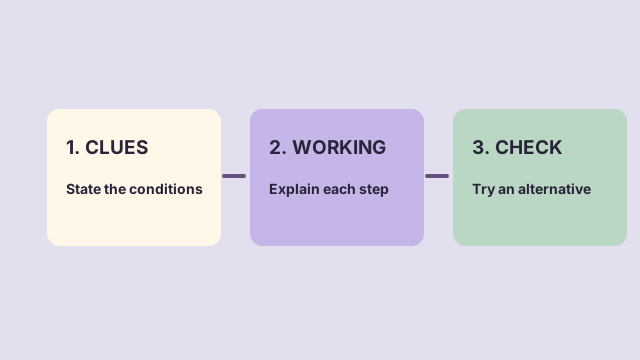
A fair puzzle needs more than a clever answer
How we test a question for hidden assumptions, competing answers, and a useful explanation.
Read the story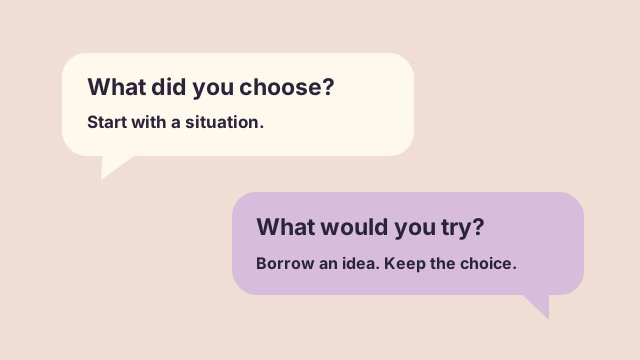
Use a playful result without turning it into a label
Five concrete ways to compare entertainment quiz answers with a friend.
Read the story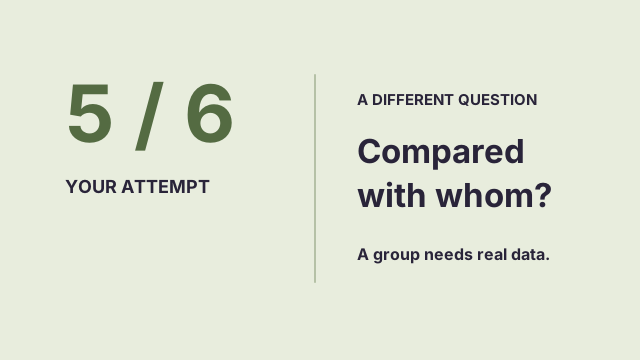
What your quiz score can—and cannot—say
A worked example of raw scores, percentages, and the missing evidence behind percentile claims.
Read the story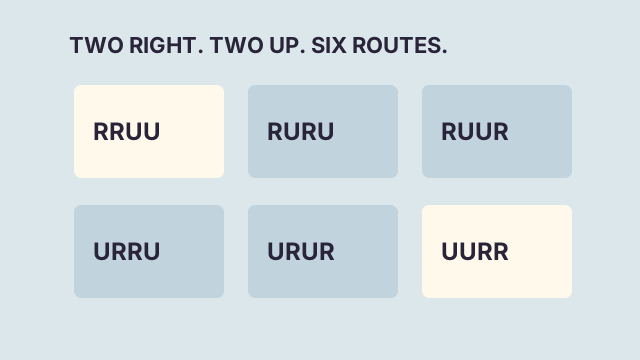
A rulebook you can test on one sheet of paper
An original tabletop exercise for discovering ambiguous rules before they cause an argument.
Read the story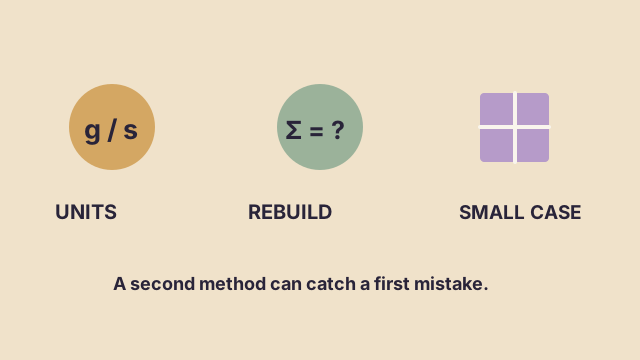
Three checks that catch an answer-shaped mistake
Units, reconstruction, and a small example can reveal errors that another calculator pass misses.
Read the story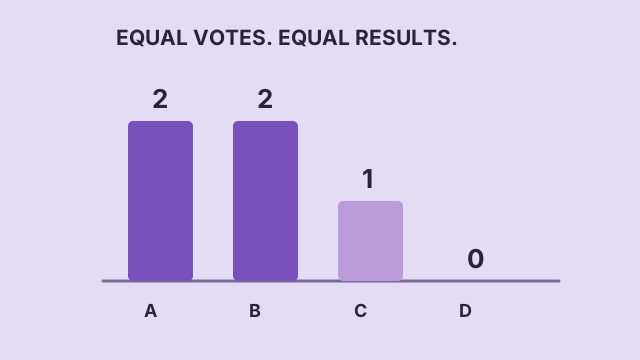
Why a style quiz should be allowed to tie
We enumerated all 1,024 answer patterns in a five-question, four-style model. Here is what happens.
Read the story