Nail pattern planner
Plan five nail patterns with a repeat rule and accent placement. Save the concept as a reference for your own design.
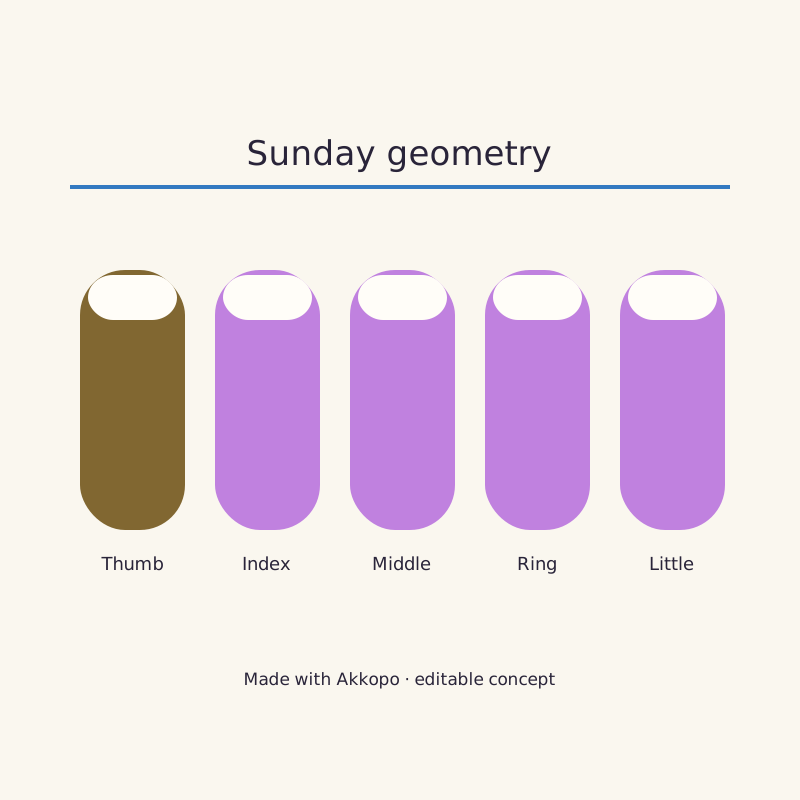
Nail pattern planner
Plan five nail patterns with a repeat rule and accent placement. Save the concept as a reference for your own design.
Try a second version
Compare a repeated motif with a single accent. This drawing is a design reference, not a promise about a product or treatment.
All changes and downloads happen in your browser. Nothing you type is sent to us. SVG downloads can be edited in a vector editor; the text download keeps your choices and notes.
The original word-to-result game
The archived game below selects a preset fictional result. It is separate from the design tool above and cannot measure rarity, predict a future or reveal another person’s feelings.
About the archived wording: percentage, rarity, IQ, timed-performance and mind-reading claims in the original copy below are fictional challenge language, not measured findings. The rules and result labels are preserved for entertainment.
Ten nails, one name, and a nail tech who reads letters instead of palms. Hidden in the way your name sounds out loud there is a color story, a shape, and a finish that has been yours all along. We just hold it up to the light.
What comes back is a full manicure concept, tuned to the energy your name gives off. Picture it drying under the little lamp. Notice if you would keep it low-key or wave it around at dinner. Then screenshot the reading and send it straight to whoever does your nails.
Read every possible result and what it means →
Polish arrived by way of the car industry
Nails have been coloured for a very long time, with henna stains, tinted powders and hard buffing all predating anything sold in a bottle. What changed in the 1920s was chemistry. Nitrocellulose lacquer had been developed as a fast-drying finish for car bodies, and the same film-forming principle transferred neatly to fingernails. Cutex brought out a liquid polish during that decade, and Revlon, founded in 1932, built its business on opaque cream shades offered in a wide range rather than a discreet tint.
Fashion adapted to the format. The half-moon manicure of the late 1920s and 1930s, which leaves the pale crescent at the base and the very tip unpainted, survives partly because early lacquers were thought harsh on the nail and partly because it simply looked modern.
Acrylics came out of a dental surgery
The account usually given credits a dentist, Fred Slack, who in the 1950s repaired his own broken nail using dental acrylic and found the result convincing enough to develop commercially with his brother. The chemistry belongs to the same family used for dentures, which is why the early salon versions smelled unmistakably of a dental practice. Gel systems that cure under ultraviolet or LED lamps came much later and harden by a different mechanism entirely.
Ten small records of the last six months
A fingernail grows at roughly three and a half millimetres a month and a toenail considerably slower, so the plate being painted today started forming around half a year ago. That lag is why nails hold evidence. Horizontal grooves known as Beau's lines mark a period when growth paused, often following a serious illness, a high fever or a course of chemotherapy, and a clinician can estimate roughly when the pause happened from how far the line has since travelled.
None of which the reading above consults, naturally. It looks at the letters in a name and hands back a manicure concept: a fine thing to screenshot and send to whoever does your nails, and a poor thing to take seriously.
Reading context & limits
For background and a fuller source trail, read Why Personality Quiz Results Feel So Accurate. These references provide context; they do not validate the entertainment result or every historical detail in the archived essay.
Content lead: LISA. Updated October 25, 2026. Send a specific factual correction.