Letter-writing prompt desk
Compose a personal letter draft by choosing its purpose and structure. The words are a writing aid, not a message from the universe.
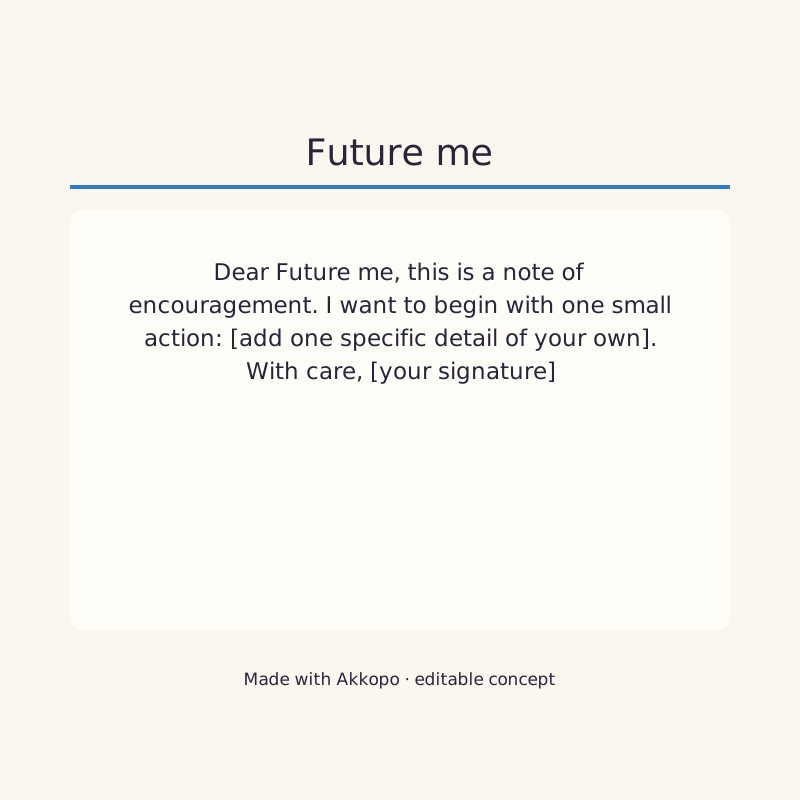
Letter-writing prompt desk
Compose a personal letter draft by choosing its purpose and structure. The words are a writing aid, not a message from the universe.
Try a second version
Replace the general line with a detail only you would know. A specific memory usually makes a stronger letter than a grand prediction.
All changes and downloads happen in your browser. Nothing you type is sent to us. SVG downloads can be edited in a vector editor; the text download keeps your choices and notes.
The original word-to-result game
The archived game below selects a preset fictional result. It is separate from the design tool above and cannot measure rarity, predict a future or reveal another person’s feelings.
About the archived wording: percentage, rarity, IQ, timed-performance and mind-reading claims in the original copy below are fictional challenge language, not measured findings. The rules and result labels are preserved for entertainment.
Out past the noise of the day, something has been keeping track of you. Not in a spooky way, in a warm one. The stars pulled your name from the crowd, folded a note around it, and have been waiting for you to slow down long enough to read it.
Below is the message that came back with your name on the envelope. There are no rules here and nothing to score. Read it once quickly, then again slowly, and see which line lands somewhere you were not expecting. Then pass it on to someone who could use a little sky mail today.
Read every possible result and what it means →
We have posted letters to the stars, literally
In November 1974 the Arecibo radio telescope in Puerto Rico beamed a three-minute transmission towards the globular cluster M13, some twenty-five thousand light years away. The message ran to 1,679 bits, a length chosen because it is the product of two primes, 23 and 73, so a recipient has exactly one sensible way of arranging the bits into a rectangle. Decoded that way it shows the numbers one to ten, the atomic numbers of the elements in DNA, a stick figure, and a sketch of the Solar System.
It was composed largely as a demonstration for the ceremony marking the telescope's refurbishment, not as a serious attempt at correspondence. The cluster will have shifted from that position long before the signal arrives, and nobody involved expected a reply.
The record with the greetings on it
Three years later each Voyager probe departed carrying a gold-plated copper phonograph record, assembled by a committee chaired by Carl Sagan. It holds spoken greetings in dozens of languages, whale song, thunder, a kiss, a mother's first words to her newborn, and roughly ninety minutes of music running from Bach to Blind Willie Johnson. The cover is etched with playback instructions and a map giving Earth's position relative to fourteen pulsars, each labelled with its blink rate.
Both craft have since passed beyond the heliopause into interstellar space. Neither is aimed at anything in particular, and each will take tens of thousands of years to drift near another star, which is the kind of postal delay that makes any letter feel patient.
Why the letter format refuses to die
The device this page uses is old, cheap and reliably effective: address something to one person and it reads differently. That is precisely what makes the Voyager record moving rather than merely archival. The greetings are spoken to somebody, in the second person, even though no one is there to hear them.
The message waiting behind your name here is warm by design, written to fit many people rather than to describe one. That is less a flaw than the entire mechanism, and it works best if you keep the line that lands and quietly leave the rest.
Reading context & limits
For background and a fuller source trail, read Why Personality Quiz Results Feel So Accurate. These references provide context; they do not validate the entertainment result or every historical detail in the archived essay.
Content lead: LISA. Updated October 25, 2026. Send a specific factual correction.