Free Coins Just Dropped — Your First Move Exposes Your Player Type
A surprise coin drop hits your account, and your very first click gets judged live.
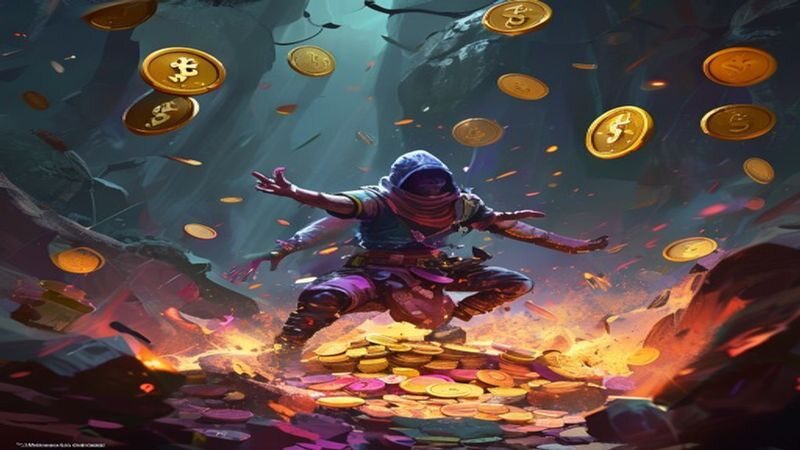
Fifty thousand coins just landed in your account and the commentary team is losing it, because nothing exposes a player's soul faster than free currency. Some of you are already sprinting to the shop. Some of you will still be sitting on this pile in three years, guarding it like treasure with a heartbeat.
Seven windfall scenarios follow. React honestly at each one — the replay booth sees everything — and at the buzzer you will get your official player profile, complete with a share line for the guild chat.
Read every possible result and what it means →
See what each choice votes for
6,470 of the 16,384 possible answer patterns tie for the most votes. The original tie rule chooses the tied label that first appeared in the selected answers. The labels therefore do not need to be equally common.
1. The coins hit your balance. What does your cursor do in the first five seconds?
- Straight to the loot banners — today feels lucky and I can prove it → The Gacha Gambler
- Nothing. The number goes up. The number is the game now → The Hoarder Dragon
- Opens the cosmetics tab like it never left → The Skin Collector
- Checks which upgrade closes the gap on the leaderboard fastest → The Pay-to-Win Strategist
2. A limited-time bundle appears: decent value, expires in one hour. Thoughts?
- Timers are a pressure tactic and my hoard does not negotiate → The Hoarder Dragon
- I buy it if the math beats every alternative, and I have done the math → The Pay-to-Win Strategist
- I buy two and mail one to a friend who's been grinding all week → The Generous Gifter
- Only if something in it sparkles. Show me the preview → The Skin Collector
3. Your guildmate whiffs ten pulls in a row and posts a sad emote. You…
- Send them coins immediately with a note that says 'run it back' → The Generous Gifter
- Explain pity systems and when they should mathematically have stopped → The Pay-to-Win Strategist
- Feel their pain deeply, then do ten pulls of my own in solidarity → The Gacha Gambler
- Quietly appreciate that my unspent balance has never hurt me like this → The Hoarder Dragon
4. Pick the notification that would genuinely make your whole evening.
- A friend logged in wearing the gear I gifted them → The Generous Gifter
- New outfit series revealed, and one of them glows → The Skin Collector
- Jackpot event tonight with boosted odds across the board → The Gacha Gambler
- Season rankings posted — and my name moved up → The Pay-to-Win Strategist
5. Be honest about your inventory screen. What does it look like?
- A museum. Every skin displayed, coordinated, and emotionally significant → The Skin Collector
- Stacked resources I am saving for a scenario I refuse to define → The Hoarder Dragon
- Half of it is stuff I bought specifically to give away → The Generous Gifter
- Duplicates from pull sessions I have chosen not to think about → The Gacha Gambler
6. The shop adds a raw stat boost with zero visual flair. Buying it?
- Instantly. Power is the prettiest cosmetic there is → The Pay-to-Win Strategist
- Invisible items are a scam against fashion and I will not participate → The Skin Collector
- Maybe later. Later meaning after the hoard reaches a rounder number → The Hoarder Dragon
- I'd rather spend that on carrying my lower-level friends up a tier → The Generous Gifter
7. Closing scenario: one last mystery chest, priced at exactly your remaining coins. Call it.
- Open it. Fortune favors the person already clicking → The Gacha Gambler
- Walk away with a full wallet and a full heart → The Hoarder Dragon
- Open it only if the drop table says the odds respect me → The Pay-to-Win Strategist
- Open it, and whatever drops goes to whoever needs it most → The Generous Gifter
What happens across every possible answer pattern?
We counted all 16,384 patterns, treating each offered choice as equally likely. This is a synthetic rule check, not visitor research. It does not describe how real people answer.
| Result | Patterns | Share of patterns |
|---|---|---|
| The Hoarder Dragon | 3,930 | 23.99% |
| The Gacha Gambler | 2,714 | 16.56% |
| The Skin Collector | 2,930 | 17.88% |
| The Pay-to-Win Strategist | 3,946 | 24.08% |
| The Generous Gifter | 2,864 | 17.48% |
Download the full counts · Download Python script · Download rule inputs
To reproduce locally: python3 measure_legacy.py --input legacy-rule-inputs.json --output counts.json. Uses Python 3 and its standard library.
How the industry learned to sell things that do not exist
The pivotal moment survives mostly as a punchline. In 2006 a small piece of decorative armour for a horse went on sale as paid downloadable content, cost about the price of a coffee, changed nothing whatsoever about play, and was mocked without mercy. It also sold, and the lesson stuck: people will pay for how something looks, quite separately from what it does.
The free-to-play model followed from there. Give the game away, keep the shop open, and rely on a pattern reported again and again in industry analysis, in which a small minority of spenders supplies most of the revenue while the large majority pays nothing at all and keeps the lobbies full.
Capsules, published odds, and the regulators who noticed
The random-draw shop takes its nickname from the capsule toy machines long popular in Japan, and its regulatory history is livelier than most players realise. In 2012 Japan's consumer protection authority took against one especially aggressive variant, in which a player had to complete a set of common items before a rare prize unlocked, judging it to fall foul of rules on prize offers. Publishers withdrew it.
China introduced requirements from 2017 obliging operators to publish the probability of what a draw can produce, which is why odds tables are now such a familiar sight. In 2018 Belgium's gambling regulator concluded that certain paid random-reward features met the national definition of gambling, and several publishers removed them from that market rather than test the point.
Unpredictable rewards, and the limits of a coin drop
The psychology underneath is not mysterious. Work on operant conditioning, most associated with B. F. Skinner, established that a reward arriving on an unpredictable schedule sustains a behaviour far more stubbornly than one arriving reliably. A shop that pays out sometimes holds attention better than a shop that pays out always, and every pity timer or guarantee after a fixed number of pulls is a designer negotiating with that fact.
Knowing all this is no protection against enjoying the pull animation, and a run of hypothetical scenarios cannot really predict what you would do with real currency. The profile is a talking point. Put it in the guild chat and let somebody dispute it.
Reading context & limits
For background and a fuller source trail, read How Game Difficulty Actually Works. These references provide context; they do not validate the entertainment result or every historical detail in the archived essay.
- Flow — APA Dictionary of Psychology
- Robin Hunicke, "The Case for Dynamic Difficulty Adjustment in Games" (ACE '05) — ACM Digital Library
Content lead: LISA. Updated October 25, 2026. Send a specific factual correction.