What Mythical Creature Is Your Alter Ego?
Old bestiaries never met you, which is a shame, because you clearly belong inside one.
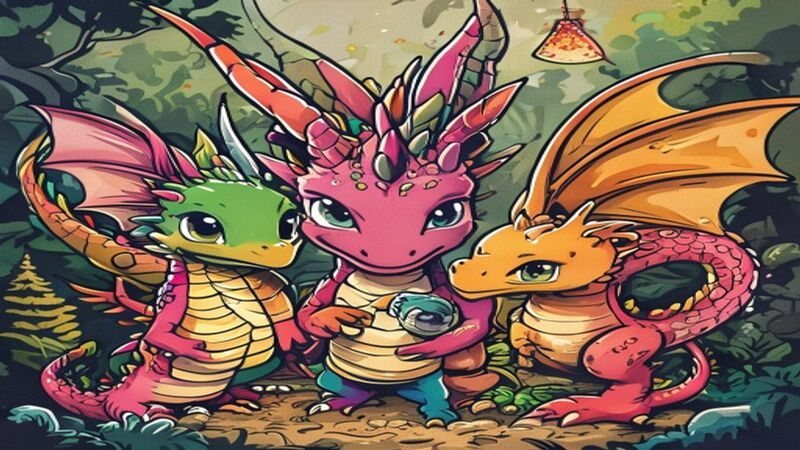
Folklore is really just field biology with worse record-keeping. Old cultures watched people carefully, noticed the same temperaments recurring, and filed them under scales, feathers, tentacles, moss, or mischief. The taxonomy holds up shockingly well, and you are in it somewhere.
Think of the next seven prompts as habitat observations. Where do you nest, what do you guard, and what exactly happens when someone crosses you? Answer on instinct — creatures do not deliberate — and this quiz will match you with the legend your ancestors would have painted on a cave wall.
Read every possible result and what it means →
See what each choice votes for
6,312 of the 16,384 possible answer patterns tie for the most votes. The original tie rule chooses the tied label that first appeared in the selected answers. The labels therefore do not need to be equally common.
1. Choose a habitat, no questions asked.
- A mountain cave with excellent acoustics and better treasure → The Dragon
- The deep sea, where the pressure keeps out the riffraff → The Kraken
- An ancient forest that rearranges its paths for strangers → The Forest Spirit
- Anywhere warm with a view of my own comeback → The Phoenix
2. It's midnight and you're wide awake. What's the reason?
- Reorganizing my life for the version of me arriving tomorrow → The Phoenix
- Unscrewing something small just to watch someone find it later → The Gremlin
- Listening to the quiet — night is when the world tells the truth → The Forest Spirit
- Brooding magnificently about something from years ago → The Kraken
3. Someone wrongs you, badly and publicly. What does instinct demand?
- Nothing today. The ocean remembers, and so do I → The Kraken
- A calm, unhurried display of exactly how outmatched they are → The Dragon
- Let the consequences grow naturally, like ivy, everywhere they live → The Forest Spirit
- Immediate, creative, extremely small-scale sabotage → The Gremlin
4. What do you hoard? Be honest with the bestiary.
- Shiny objects of no resale value and infinite personal meaning → The Gremlin
- Grudges, secrets, and the locations of sunken things → The Kraken
- Achievements, savings, and one very defended personal space → The Dragon
- Fresh starts — I collect them like other people collect stamps → The Phoenix
5. Which compliment would actually land the hardest?
- You make everything around you grow → The Forest Spirit
- You came back stronger, and everyone noticed → The Phoenix
- You're magnificent and slightly terrifying, in that order → The Dragon
- You're the funniest disaster I have ever met → The Gremlin
6. A lost stranger wanders into your territory. Your honest reaction?
- Guide them out gently — they'll never know it was me → The Forest Spirit
- Surface briefly, alarm them profoundly, submerge without explanation → The Kraken
- Adopt them mid-crisis and narrate my rebirth arc unprompted → The Phoenix
- Grant an audience. Visitors are acceptable if they compliment the lair → The Dragon
7. How do you handle endings — jobs, eras, group chats, all of it?
- Burn it down ceremonially and hatch from the ashes annually → The Phoenix
- Sink the whole era to the seabed and guard the wreckage → The Kraken
- Compost it. Old chapters make excellent soil for new ones → The Forest Spirit
- Keep one trophy from it and add it to the pile → The Dragon
What happens across every possible answer pattern?
We counted all 16,384 patterns, treating each offered choice as equally likely. This is a synthetic rule check, not visitor research. It does not describe how real people answer.
| Result | Patterns | Share of patterns |
|---|---|---|
| The Dragon | 3,635 | 22.19% |
| The Phoenix | 3,826 | 23.35% |
| The Kraken | 3,886 | 23.72% |
| The Forest Spirit | 3,870 | 23.62% |
| The Gremlin | 1,167 | 7.12% |
Download the full counts · Download Python script · Download rule inputs
To reproduce locally: python3 measure_legacy.py --input legacy-rule-inputs.json --output counts.json. Uses Python 3 and its standard library.
The book behind a thousand monsters
Most medieval European monster lore descends from one anonymous text, the Physiologus, compiled in Greek in Alexandria at some point in the early centuries of the common era. It paired creatures, real and invented alike, with a short moral lesson: the pelican, the panther, the phoenix, each carrying a meaning. Translated and expanded over centuries, it grew into the medieval bestiary, and bestiaries were copied, illustrated and cheerfully embellished for something like a thousand years.
They were never field guides. A bestiary is closer to an anthology of meanings, which is exactly why its creatures map so neatly onto human temperaments.
A unicorn assembled out of a translation
The unicorn reached Europe partly through a translation problem. The Hebrew re'em, some species of wild ox, was rendered in the Greek Septuagint as monokeros, one-horn, and the Latin Bible followed suit. A single-horned beast was now attested by scripture and therefore needed a body, so illustrators supplied one.
The horns supplied themselves. Long spiral tusks arrived on European markets from the Arctic and sold at ruinous prices as unicorn horn with medicinal powers. They came from narwhals.
The sea monster with a plausible original
The kraken enters the record through Scandinavian accounts of an enormous many-armed animal off the Norwegian coast, and here the sceptical explanation is unusually strong. Giant squid are entirely real, reach lengths that startle the people who handle the specimens, and occasionally wash ashore. One dead animal on a beach is quite enough to seed a legend.
Fossil bones have been proposed as the origin of dragon and griffin stories too, most prominently by the folklorist Adrienne Mayor. That remains an appealing argument rather than a settled finding, and it is best quoted as a hypothesis.
Sorting people by beast
Which is roughly what happens above, with rather less scholarship: five creatures, seven prompts, no taxonomy underneath any of it. Still, the impulse is genuinely ancient. People have always described each other in animals, and the bestiary tradition simply wrote the habit down in gold leaf. The old compilers would probably have approved of the method, if not of the accuracy.
Reading context & limits
For background and a fuller source trail, read Why Personality Quiz Results Feel So Accurate. These references provide context; they do not validate the entertainment result or every historical detail in the archived essay.
Content lead: LISA. Updated October 25, 2026. Send a specific factual correction.