Left Brain or Right Brain: Which Side Drives?
Spreadsheet, sketchbook, or pure gut feeling — find out which thinking style takes the wheel.
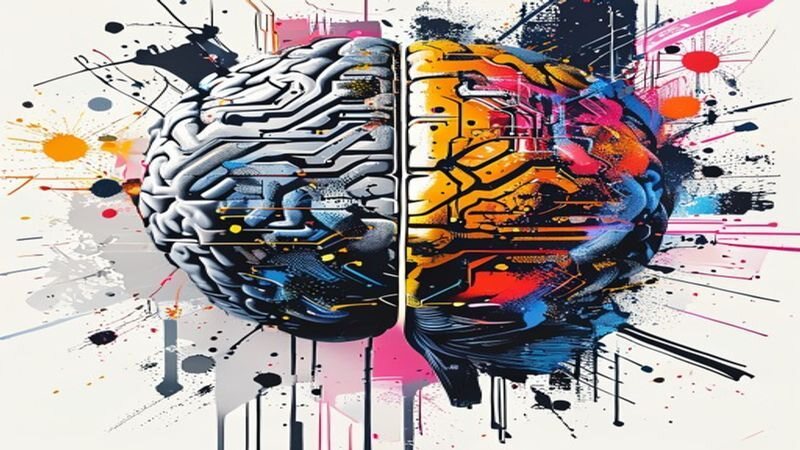
Science gently retired the left-brain, right-brain idea a while ago — real brains use both halves for nearly everything, like ambidextrous roommates sharing one small kitchen. As a metaphor, though, it refuses to die, because it points at something true: people solve problems in wildly different styles.
Some of us reach for a spreadsheet, some for a sketchbook, and some for a feeling we cannot defend but trust completely. Ahead are seven scenarios designed to reveal which style grabs the wheel when things get interesting. Consider it a portrait of your thinking, painted with cheerfully outdated anatomy.
Read every possible result and what it means →
See what each choice votes for
4,200 of the 16,384 possible answer patterns tie for the most votes. The original tie rule chooses the tied label that first appeared in the selected answers. The labels therefore do not need to be equally common.
1. Flat-pack furniture has entered your home. Describe hour one.
- Instructions read fully, parts sorted, bolts counted twice → Logic Is Driving
- I study the picture on the box and improvise the rest → Creativity Is Driving
- My hands seem to know what to do. I don't question them → Intuition Is Driving
- Manual until step four, freestyle once it stops making sense → The Switch-Hitter
2. A song gets stuck in your head. What is your brain doing with it?
- Rewriting the lyrics into something much sillier → Creativity Is Driving
- Dissecting exactly why that chorus works, structurally → Logic Is Driving
- Attaching it to a mood I'll rediscover in ten years → Intuition Is Driving
- Toggling between enjoying it and analyzing it, restlessly → The Switch-Hitter
3. Your team hits a genuinely strange problem. Which role do you assume?
- Translator between the whiteboard people and the idea people → The Switch-Hitter
- The one who says 'option two feels wrong' and is right → Intuition Is Driving
- The one at the whiteboard breaking it into numbered pieces → Logic Is Driving
- The one whose ridiculous suggestion everyone mocks, then tries → Creativity Is Driving
4. Pick the desk where you would actually get things done.
- Mostly bare, near a window, arranged entirely by feel → Intuition Is Driving
- Labeled drawers, one pen, a filing system with a name → Logic Is Driving
- Tidy on Monday, archaeological by Friday, reborn each weekend → The Switch-Hitter
- Beautiful chaos — every pile is a thought mid-sentence → Creativity Is Driving
5. Two decent job offers land at once. How do you choose?
- Weighted spreadsheet. The numbers vote and I count them → Logic Is Driving
- I imagine an ordinary Tuesday at each one, in cinematic detail → Creativity Is Driving
- Spreadsheet first, then my gut overrides it. I call this balance → The Switch-Hitter
- Coin flip — then I notice which outcome disappoints me → Intuition Is Driving
6. Someone needs directions to a place you know well. You give them…
- Landmarks: the blue house, the mural, the territorial goose → Creativity Is Driving
- A gesture, some confidence, and 'you'll sense when you're close' → Intuition Is Driving
- Both versions, unprompted, with commentary comparing their merits → The Switch-Hitter
- Street names, distances, and a warning about the tricky turn → Logic Is Driving
7. One last riddle: a stranger hands you a blank notebook. What does it become?
- Half planner, half confessional, thoroughly cross-referenced → The Switch-Hitter
- A ledger of something countable — habits, books, expenses → Logic Is Driving
- Sketches, fragments, and one page torn out dramatically → Creativity Is Driving
- Blank, until the day it very obviously shouldn't be → Intuition Is Driving
What happens across every possible answer pattern?
We counted all 16,384 patterns, treating each offered choice as equally likely. This is a synthetic rule check, not visitor research. It does not describe how real people answer.
| Result | Patterns | Share of patterns |
|---|---|---|
| Logic Is Driving | 4,096 | 25.00% |
| Creativity Is Driving | 4,096 | 25.00% |
| The Switch-Hitter | 4,096 | 25.00% |
| Intuition Is Driving | 4,096 | 25.00% |
Download the full counts · Download Python script · Download rule inputs
To reproduce locally: python3 measure_legacy.py --input legacy-rule-inputs.json --output counts.json. Uses Python 3 and its standard library.
A careful finding that escaped the laboratory
The idea started with real and remarkable science. In the 1960s Roger Sperry and Michael Gazzaniga studied a small group of patients whose corpus callosum, the thick bundle joining the hemispheres, had been cut to control severe epilepsy. With the halves no longer exchanging notes, each could be shown information the other knew nothing about, and the two responded in strikingly different ways. Sperry shared the Nobel Prize in Physiology or Medicine in 1981 for the work.
What the popular press did next was a leap the researchers never made. Findings about surgically separated hemispheres in a handful of patients became a story about ordinary people having a dominant side, and by the 1970s that story was being sold as a personality theory.
Lateralisation is real; a dominant hemisphere is not
Brains genuinely are asymmetric. Language processing sits mainly on the left for most right-handed people, a pattern traced back to Paul Broca in 1861 and Carl Wernicke in 1874. Aspects of spatial attention and face recognition lean right. These are tendencies about particular functions, not about people.
The individual-differences version has been tested directly. Jared Nielsen and colleagues at the University of Utah analysed resting-state brain imaging from over a thousand participants aged seven to twenty-nine and published in 2013 that they found no sign of anyone having a globally stronger left or right hemisphere. Asymmetry exists network by network; it does not add up into a personal type.
So what is the quiz actually sorting?
Preferences and habits, described by you. How you approach flat-pack furniture or choose between two job offers is a real thing worth knowing about yourself, but it is a story about temperament and training rather than anatomy. The style-preference literature offers a useful caution here: Harold Pashler and colleagues reviewed the learning-styles evidence in 2008 and found that although people readily report a preferred mode, matching teaching to that preference did not reliably improve what they learned.
Hold the label loosely
Type quizzes also wobble on repetition. Take one twice a few weeks apart, with a different mood and a different week behind you, and a fair number of people land in a different category, which is a hint that the boundaries are softer than the labels suggest.
So enjoy the result as a mirror rather than a verdict. It measures nothing about your brain, ranks nothing about your intelligence, and any figure quoted in a title of this kind is a manner of speaking, not a count.
Reading context & limits
For background and a fuller source trail, read Are Online IQ and Brain Tests Accurate?. These references provide context; they do not validate the entertainment result or every historical detail in the archived essay.
- Evidence and brain-training claims — FTC
- Intelligence — American Psychological Association
- IQ — Encyclopaedia Britannica
Content lead: LISA. Updated October 25, 2026. Send a specific factual correction.