Design a tiny bookshop for one weekend
Arrange the shelves, choose the event, and discover the shop you would like to visit.
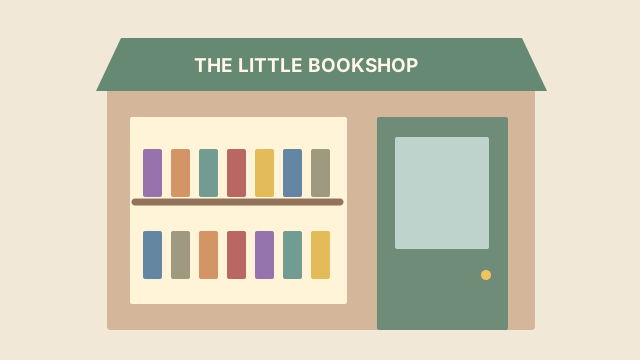
You are designing an imaginary bookshop that opens for a single weekend. There is no budget spreadsheet and no business recommendation here. The exercise is about what makes a place interesting to you: finding, organizing, making, or sharing.
Five decisions create a fictional shop concept. The resulting names are playful summaries, not predictions of commercial success or evidence about your personality. Every option contributes one visible vote, and ties are shown without a hidden tie-break.
Make your choices
0 of 5 answered
All the possible styles
You can read these before playing. They are fictional descriptions, not personal assessments.
The Unexpected Shelf
Your shop connects things that a search box might keep apart. The window invites a reader to be pleasantly sidetracked. Its strength is surprise; its possible weakness is making a visitor work too hard to find a particular title. This fictional concept is not a retail strategy.
One idea to try: Pair two topics with one clear connecting question so the surprise has a reason.
The Clear-Path Bookshop
You designed a place that helps people enter a subject without feeling lost. Signs, explanations, and a useful starting point do much of the work. The tradeoff is over-organizing away the pleasure of browsing. The result reflects this design exercise, not your general tolerance for uncertainty.
One idea to try: Offer a starting shelf and one clearly marked invitation to wander beyond it.
The Paper Workshop
Your bookshop encourages visitors to do something with an idea. A small making table turns reading into a beginning rather than an endpoint. The activity still needs to be welcoming to someone who would rather watch. Nothing in this result claims that making is superior to reading quietly.
One idea to try: Prepare a five-minute version of the activity with no special equipment or expected skill.
The Conversation Corner
You gave the shop a social center. Books become reasons for a thoughtful exchange rather than tests of how much anyone has read. A good conversation also leaves room for listening and disagreement. This label does not measure your ability to host a real event.
One idea to try: Choose a discussion question that can be answered from a short shared passage, not prior expertise.
Design around a visitor, not a label
Imagine someone entering with only fifteen minutes. Can they understand what your shop offers without asking? Then imagine someone who wants to stay for an hour. The best addition may be a clear sign, a seat, or a small activity rather than more decoration.
Compare your first and last choices. If the window promises surprise but the takeaway promises clarity, that is not a contradiction. It is a design challenge: can a visitor discover something unexpected and still leave knowing where to go next?
These scenarios and worked examples were written for Akkopo. Reasoning is shown on this page; fictional situations are not presented as observed data.
Something unclear? Suggest a correction.